
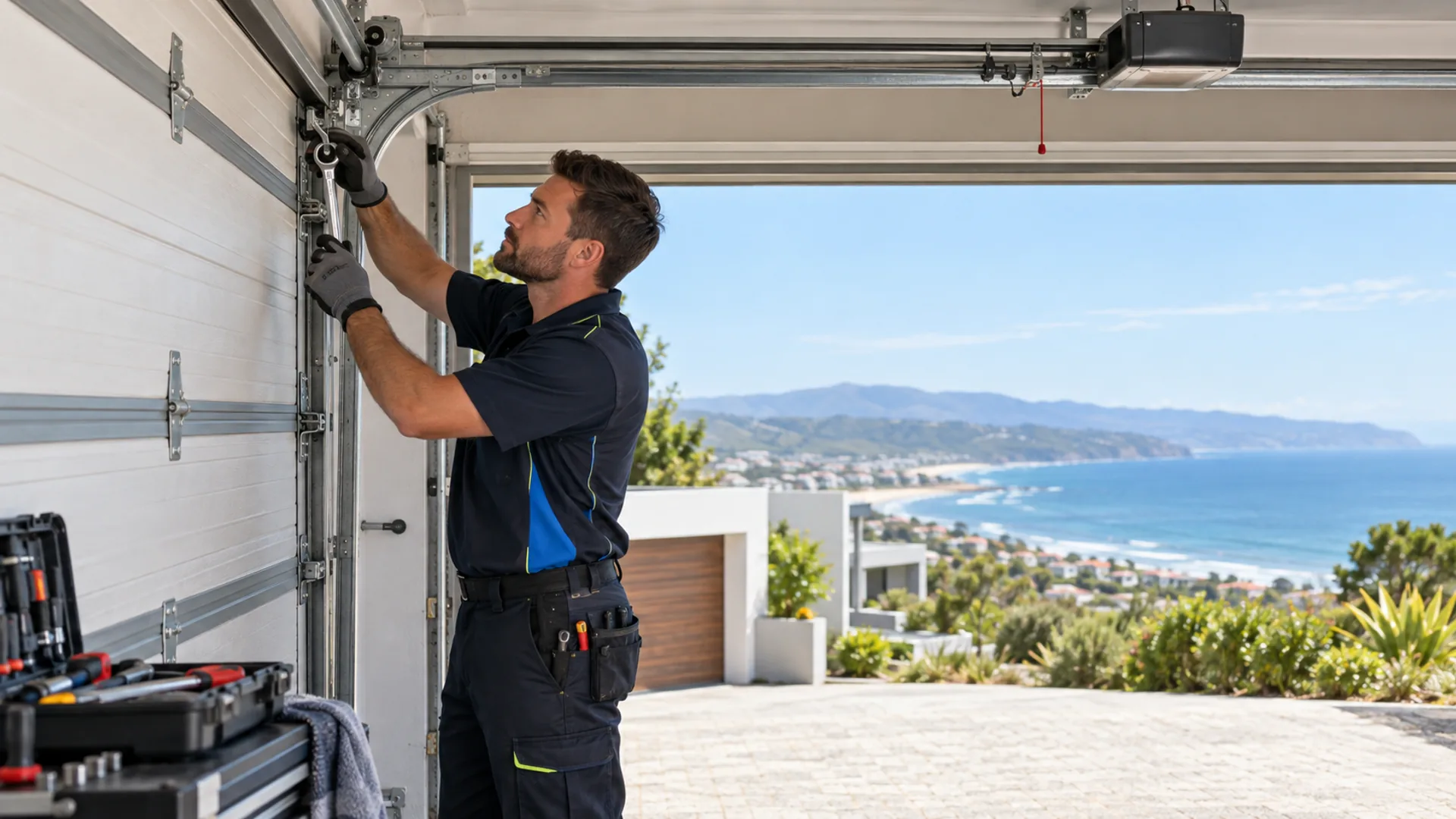
A garage door usually changes before it fails completely. It may become noisier, move unevenly or hesitate at a point that used to feel smooth. These early changes do not always identify one specific fault, but they are useful garage door repair signs Garden Route property owners should not ignore.
1. The door moves unevenly
One side of the door should not lead, lag or drop differently from the other. Uneven movement can be linked to track alignment, rollers, cables, springs or the way the door is balanced. Continuing to operate a door that twists or binds can place more strain on several components.
2. New scraping, grinding or banging noises appear
A working garage door will make some normal mechanical sound, but a new harsh noise deserves attention. Scraping can indicate contact where parts should move freely. Grinding may point to worn rollers, bearings or motor components. A loud bang can be associated with a sudden hardware or spring problem and should be checked before further use.
3. The door feels unusually heavy
A correctly balanced door should not rely on the motor alone to lift its full weight. If the door feels much heavier during manual operation, the counterbalance system may not be doing its job properly. Springs and cables carry significant tension, so they should not be adjusted without the right tools and experience.
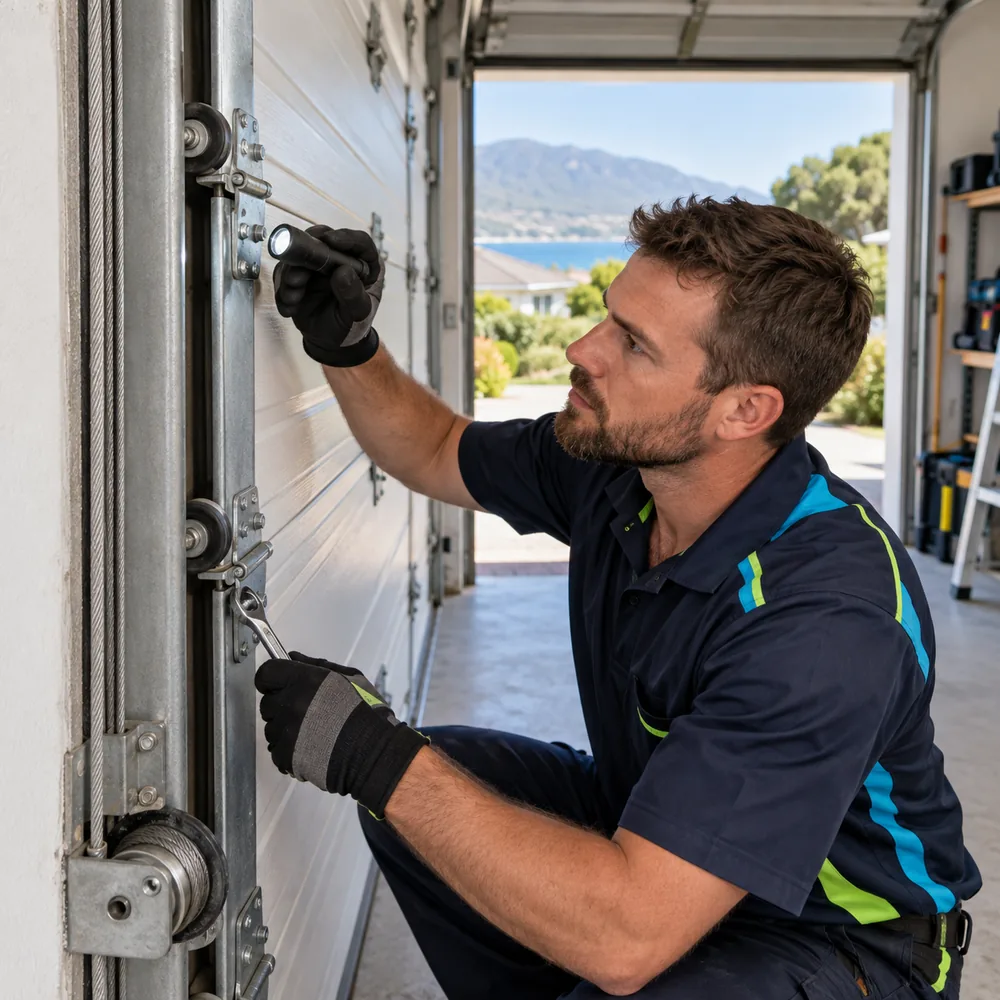
4. The motor runs but the door does not travel correctly
You may hear the motor while the door remains still, stops early or reverses. The cause could involve the drive system, travel limits, safety controls or resistance in the door itself. Resetting a control without checking the mechanical movement can hide the real reason the motor is struggling.
5. The door will not close or reverses unexpectedly
Safety sensors are designed to prevent the door from closing onto an obstruction. Dust, misalignment, damaged wiring or an object in the doorway can interrupt that system. The door can also reverse when it meets abnormal resistance. Check that the entrance is clear, but do not bypass the safety controls to keep the door moving.
6. Cables, rollers or tracks look damaged
Frayed cables, loose brackets, bent tracks and cracked rollers are visible warning signs. Avoid pulling on a cable or forcing a roller back into position. These parts work as part of a larger moving system, and an isolated adjustment can create a new alignment or safety problem.
7. The problem keeps returning
A door that repeatedly sticks, loses its limits or needs frequent small adjustments may have an underlying balance, alignment or component issue. Repeatedly treating the symptom can increase wear on the motor and hardware. A complete inspection is more useful than another temporary reset.
What to do before booking a repair
Stop using the door if movement looks unsafe, a cable is loose, a spring appears damaged or the door cannot remain supported. Keep people, pets and vehicles away from the opening. Do not loosen spring hardware or remove load-bearing brackets.
When you contact a technician, explain what the door does, when the problem started and whether it happens during opening, closing or both. A short video and clear photos of the tracks, motor and visible hardware can help with preparation.
Also mention whether the door can still be operated manually, whether the entrance is the property’s only vehicle access and whether a vehicle is trapped inside. These details help the service team understand access needs without encouraging anyone to force a damaged door.
Immac Garage Doors provides garage door repair in the Garden Route for residential and commercial systems. We check the complete door before recommending adjustment, repair or replacement. If your door is showing one of these signs, share the problem through our contact section or call us.